

The automotive lighting industry is undergoing a fundamental transformation. As electric vehicles (EVs) dominate global markets, the long tail light—also known as the through‑type or full‑width taillight—has emerged as one of the most distinctive design signatures of next‑generation vehicles. Behind every seamless, luminous rear light bar lies a highly engineered injection mold that must deliver optical perfection, dimensional precision, and production efficiency at scale.
This article explores everything you need to know about EV long tail light molds: the technologies that power them, the materials that define them, the market forces driving demand, and the global suppliers manufacturing them.
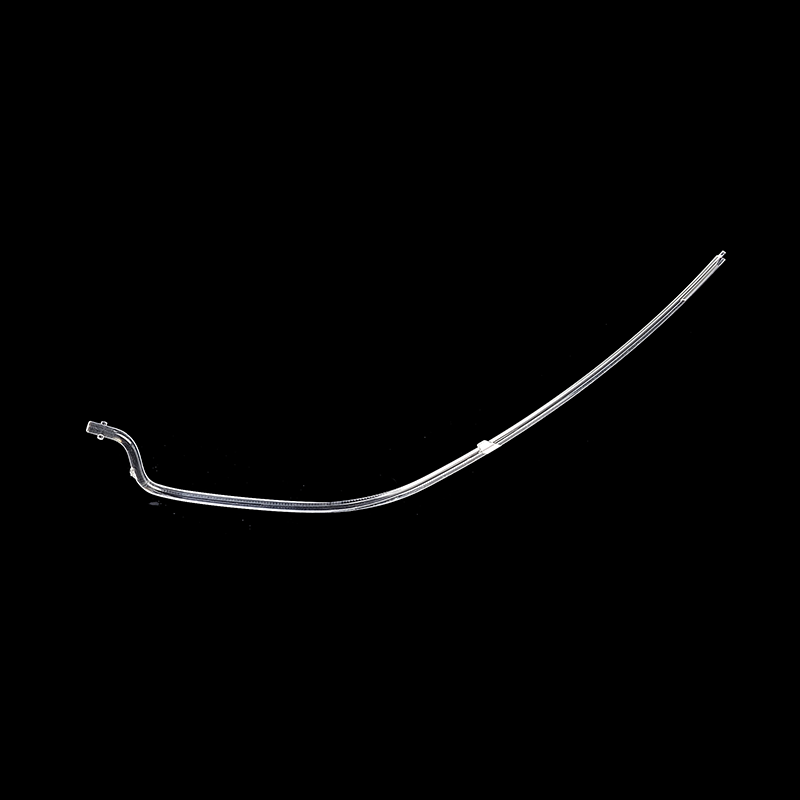
An EV long tail light mold is a precision tooling system used in injection molding to produce through‑type taillight components—elongated light bars that stretch across the full width of a vehicle’s rear. Unlike traditional segmented taillights, long tail lights create a continuous, wraparound lighting effect that has become a hallmark of modern EV design.
These molds typically produce multiple components in a single assembly: transparent outer lenses (light guides), opaque housings, decorative bezels, and integrated sealing features. The most advanced systems employ multi‑material (2K or 3K) injection molding to combine different plastics and colors in one seamless production cycle, eliminating post‑painting and secondary assembly operations.
The through‑type taillight is more than a styling trend—it has become a strategic branding tool for EV manufacturers. According to A2MAC1’s 2025 benchmarking analysis, star‑ring lamps (seamless, wraparound lighting systems) are increasingly featured across Chinese EV and premium vehicle lineups, with particularly high adoption in rear lighting applications. These designs typically exceed RMB 500 per unit in cost, reflecting their value as a brand differentiator.
Key drivers behind the trend include:
● Brand Identity: Seamless integration across the full width enhances visual unity and creates a distinctive lighting signature.
● Aerodynamics: Advanced LED systems reduce optical diffusion component thickness by up to 30%, contributing to lower drag coefficients.
● Function Integration: Animated sequences, adaptive lighting, and customizable light signatures are increasingly embedded into through‑type designs.
Yaxin mold , a leading automotive lighting mold supplier, reports that multi‑color effects are now molded directly into lighting units rather than painted, improving both durability and environmental impact while enabling premium finishes such as deep metallic greens, satin chameleon blues, and glossy graphite tones.
Manufacturing through‑type taillight components presents unique challenges that distinguish these molds from conventional lighting tooling.
Dimensional Precision Across Extended Lengths
Long tail light molds must maintain exceptional accuracy across mold cavities that can exceed 1.2 meters in length. Leading manufacturers achieve positional accuracy of ±0.005 mm using 5‑axis CNC machining. This level of precision is essential because any deviation in the lens geometry will produce visible distortion in the finished light bar.
Optical Surface Quality
Taillight lenses utilize transparent or semi‑transparent materials (PC and PMMA) with extremely demanding optical requirements. Any flow marks, weld lines, or sink marks will compromise light transmission and visual appearance. Mold cavities for light guides require mirror‑grade surface finishes with a roughness rating of Ra 0.05 μm or better to achieve defect‑free transparency.
Advanced mold manufacturers employ high‑precision, temperature‑controlled mirror‑polished cavities to achieve perfect, defect‑free surface finishes. These molds incorporate precision vents that prevent burn marks and splay on transparent components.
Complex Geometries and Undercuts
Modern long tail lights incorporate light guides, reflector cups, and decorative trims into highly sculpted 3D surfaces. Achieving these features requires sophisticated mold architectures with multiple slides, lifters, and cores. Wire electrical discharge machining (EDM) is often used to create complex undercuts that cannot be reached by conventional cutting tools.
Mold Steel Selection
The mold itself must withstand high‑volume production cycles while maintaining optical precision. Common steel grades include:
Steel Grade Hardness (HRC) Applications Key Advantages
P20 28–32 General purpose Excellent polishability, cost‑effective
718H 32–36 High‑gloss surfaces Superior wear resistance
S136H 48–52 Optical components Corrosion resistance, exceptional surface finish
H13 44–48 High‑temperature applications Thermal stability, long service life
For optical components requiring mirror finishes, S136H is the preferred choice due to its corrosion resistance and ability to achieve SPI A‑1/diamond polish grades.
Optical Materials for Parts
The finished taillight components are typically molded from advanced engineering plastics:
Polycarbonate (PC) dominates the market, offering 90% light transmission, impact resistance 10x greater than glass, heat resistance up to 120 °C, and UV stability with appropriate coatings.
Polymethyl Methacrylate (PMMA) remains popular for applications requiring superior scratch resistance, higher light transmission (92%), enhanced color stability, and lower cost for non‑critical applications.
Recent innovations include hybrid PC/PMMA blends that combine the best properties of both materials, enabling complex light guides and multi‑color designs without compromising durability.